Remember the guy who got his $17,000 seized by the cops because he might at some point in the future buy drugs with it?
He's getting his money back. Not with interest, mind you, but as criminal justice *headdesks* go, this is a remarkably good outcome. The decision is here.
CC
today's criminal justice *headdesk* is older, but fresh in my mind as the guy in question spoke at GULC yesterday and I was there.
Friday, February 26, 2010


Thursday, February 25, 2010
You probably had to be there
"What are you working on?" The Alto said to Jana-who-creates, who was knitting during a break in choir practice. I had been at the church and come down to hang out with Jana during the break.
"It's a baby blanket," Jana said, "For her," she said, indicating me. About five pairs of choir eyes, the Alto's included, were suddenly on me as I stepped backwards, waving my hands in protest "...to give to a friend" Jana finished, having noted the confusion.
Sucks to disappoint the choir.
CC
"It's a baby blanket," Jana said, "For her," she said, indicating me. About five pairs of choir eyes, the Alto's included, were suddenly on me as I stepped backwards, waving my hands in protest "...to give to a friend" Jana finished, having noted the confusion.
Sucks to disappoint the choir.
CC
Addendum on Amy Bishop
When the "professor denied tenure shot some of the people in her department" story came up, I wondered if her invention was really as impressive as some of the initial news stories claimed. The technology to keep things at stable temperatures isn't new and to me it sounded like something that would have been put together a long time ago if it were something that Biologists really needed. Climate control and remote cameras aren't really new technology, after all.
I wrote to an actual biologist about it and she pointed out kindly that she was a plant biologist and only microbiologists would need Bishop's invention. Beloved-by-CC New York Times science writer Gina Kolata has written that my initial suspicions were more or less on the mark.
Also, yes, UAH-Huntsville is going to get to keep at least some of the proceeds from said invention, which is, I assume, why the UAH president was hyping it as this big technological breakthrough.
I am morbidly fascinated with this woman, which is weird because I haven't really given much thought at all to the guy who flew his plane into the IRS building. This is partially because the guy who flew his plane into the IRS building comes off as such a dumbass when you read his manifesto. The whole act just starts to seem like a giant temper tantrum from a lunatic who couldn't deal with the fact that he had to live by the same rules as everyone else. I don't know why Dr. Bishop should be more interesting, maybe it's just that she initially seemed like a normal person who snapped and more and more investigation has unveiled that she is so not.
I'll probably spare y'all after this, but I'm going to be reading whatever is written about her for awhile.
CC
CC doesn't think Kinsi is a bad Unitarian at all
Though she's very much enjoying his series about why he is one.
As objectionable as the phrasing "bad Unitarian" is to one who takes the creedlessness aspect of UUism seriously, the basic idea that we should examine the ideals we've set up and see if they are really the ideals we want is sound and is something we should do more often. I don't entirely agree with the conclusions Kinsi comes to, but I can appreciate his process and I think it's something we should be open to.
CC
Ps. Criminal justice *headdesk* of the day.
Wednesday, February 24, 2010
If CC were snowed in in the Pittsburgh airport
the results would look a lot like this, but I'm not as cute:
CC
Ps. Criminal Justice *headdesk* of the day.
CC
Ps. Criminal Justice *headdesk* of the day.
Thursday, February 18, 2010
Man...
Why didn't they have The Huffington Post to back me up for all the stuff I got in trouble for when I was a kid?
CC
Ps. Criminal justice *headdesk* of the day.
CC
Ps. Criminal justice *headdesk* of the day.
Tuesday, February 16, 2010
Sunday, February 14, 2010
Question for my readers who are in academia
I've been reading about the scientist who shot several members of her department at the University of Alabama in Huntsville.
The Wall Street Journal article linked above says, in part, "According to a 2006 profile in the Huntsville Times, Ms. Bishop and her husband invented a cell-growth incubator that promised to cut costs and maintenance involved in cell generation."
She had been at the University since 2003 and the president of her university said her invention would change the way biological research is conducted.
Regrettably, I'm no longer on a liberal arts campus, though I have a question in to a biologist about if she thinks that's the case.
But taking the UAH president at his word and assuming the idea was revolutionary, given that it was invented while Ms. Bishop worked at UAH, does that mean that it belongs to the University and that the University keeps all the potential profits from her idea even though they had just kicked her out the door?
Now THAT'S a motive for murder.
CC
Thursday, February 11, 2010
Hiding out in North Carolina
So Tuesday night, just as the snow was starting, theCSO and I got the car out and I headed down south to the liberal arts school where I went to college. I'm crashing with my Smart Friend Pam, who teaches there, and am making an effort to get some homework done despite the fact that it is not at all clear that any of the reading I'm doing will ever be discussed as people are arranging their schedules.
It's been nice to hang out with Joe-the-Math-Guy some. My favorite thing about being on the campus of a liberal arts school is that I can just pop by and ask a biologist if I have a biology question and I've gotten to do some of that.
So. anyway, that's what's up with me. It's not much, but it beats being stuck in the house. TheCSO is headed to an anime con back in Virginia. So everybody's good.
CC
Sunday, February 07, 2010
I'm so teaching my dog to do this before next football season
Awesome.
CC
Ps. You only need to watch the first ten seconds or so. It doesn't move on from there.
Thursday, February 04, 2010
I got nothin' today
So let's look at a picture of Uma Thurman as Medusa.
I'm trying to figure out a topic for a paper for my Supreme Court seminar and generally moping because it looks like I will be snowed in this weekend. I don't respond well to being snowed in.
Anyway, expect pouting and complaining and feel free to cheer me up.
CC
who, were she Medusa, would stay away from stuff that could be used as a mirror, such as the little apple on the back of a first-gen Iphone.
Wednesday, February 03, 2010
Hmmm...Tim Burton show at MoMA
Sounds promising, but I'm wondering if it would be too crowded to really experience anything. I don't get as much out of art when I have to experience it in a big crowd. Hmmm... Will think about it in a month.
CC
CC
Monday, February 01, 2010
Who dat?
While I lived in New Orleans, there was a really hilarious sportscaster named Buddy Diliberto. Once, he announced that if the Saints ever went to the Superbowl, he would parade down Bourbon Street in a dress.
Diliberto died in 2005.
For the first time in 42 years, the Saints are headed to the Super Bowl, and few days ago, 80,000 people kept Bobby's promise. For a city famous for parades, the results aren't visually impressive. But it moved me to see so many having a great time doing something ridiculous for the team they love.
When I lived in New Orleans, I didn't like it. I felt like it was an insulated community and if you hadn't been born there, you didn't matter to anybody. I was honestly happy to leave. But between Hurricane Katrina and the Saints going to the Superbowl, I've come to realize that the place really got under my skin. New Orleans still matters to me.
The economy sucks, Haiti is still a mess and we don't have universal healthcare so it is probably stupid to care about football.
But I love a good triumph over adversity story.
(And I haven't forgotten Indiana stealing the Colts from Baltimore.)
Who dat!
CC
Church and Diets
A friend of mine used to say "religions are like diets, everybody always wants to talk about what works for them."
Lizard Eater looks at that theme in more depth in a post today and I really like what she comes up with.
CC
Ps. Criminal Justice *headdesk* of the day. And it's really just the tip of the iceberg where Sheriff Joe Arpaio is concerned. My favorite story is the "County detention officer steals a file from a defense attorney right in the middle of a trial" one." Some of the upshot of that is reported here and you can see the video here.
Saturday, January 30, 2010
Epilonious' take on boycotts
is really great. I tend to agree with just about everything he has to say here, despite my boycott of the entire City of Atlanta until they make it not suck to drive there.
CC
Ps. Criminal justice *headdesk* of the day.
CC
Ps. Criminal justice *headdesk* of the day.
Friday, January 29, 2010
January's Book I don't expect to like: The Road
On January 6, I announced that my New Year's resolution was to read some books I didn't think I would like and write about my reaction to them. I'm going to try to read one a month. I gave a large list of categories of books I wouldn't normally read and asked for suggestions, but truth be told, I already knew what January's book would be. At Christmastime, my father-in-law had mentioned that Cormac McCarthy's The Road was one of his favorite books (he might have said his favorite) and said he'd be interested to hear what I thought of it if I ever read it.
For those keeping track, The Road is a travelogue of sorts and it fails the Bechdel test*, and yes, it's the sort of book I generally would not expect to like. I have what I think are good reasons for not liking what I don't like. I don't expect every book to grant me an epiphany about how wrong I was to dislike its genre, though I won't be surprised if that happens once or twice. Mostly, I'm going to read with an open mind and see what I discover.
____
In college, I took a class where we had to watch 2001, a Space Odyssey and write a reaction paper to it. I wrote in my paper that I thought that Kubrick was very clever to put the space-ballet-like scenes of outer space with lovely classical music in and have them go on for so long. Surely, I thought, the viewer who was sitting in a movie theater watching this would be at first transfixed, then as the minutes passed find their attention fading until even the beauty was monotony. The would shift in their seats and reach uneasily into the popcorn bucket, waiting for the dragging loveliness to end.
I allowed as to how if there's a better brief introduction to what years of space travel must feel like, I haven't seen it. I recall getting a rather nasty comment in the margins of that paper. Apparently the professor didn't share my interpretation.
One of the reasons I don't like travelogues is that often the journey is treated as all one needs for a plot structure. It's a wire on which the story's sometimes interchangeable events can be neatly strung. Like 2001, McCarthy has characters on a journey, and like 2001, the story's very monotony gives a vivid sense of what the journey must be like, though "vivid" seems like a strange word to apply to a novel that is so fundamentally bleak. It's not a long novel. I read 3/4 of it in a Starbucks while my husband made an especially lengthy trip around Home Depot. But that time passed very slowly.
The Road is about a father and son who are walking across what seems to be to be the southern part of a post-apocalyptic America, though I'm not sure the geography actually fits unless their journey is much longer than the book makes it seem. The apocalypse, whatever it is, has taken the lives of almost everyone in America and left a thick cloud of dust and ash blocking out the sun. Almost all forms of life are gone and the father and son survive by scavenging. They are walking toward a better life that may or may not exist and trying to avoid cannibals. Stuff happens to them. Sometimes they find food, sometimes they don't.
They spend a lot of nights shivering and holding each other in ways that might have seemed maudlin if this book were about a mother and child, but work given the father's manly stoicism. Somehow he's allowed more melodrama than would have worked with a mother character. Which is not to say that I appreciate what happened to the mother. I don't and I think this otherwise fine book deserved a better written characterization of her. But I don't have to like the way gender is used to understand that it is used effectively in this case. The dynamic of youth vs. maturity is also used well as the father saves the pair's bodies over and over, but the son saves their souls, constantly asking why the pair can't help every desperate person they find on their trip. It's a question that hangs in the air as one reads, yet the father's pragmatic point of view is perfectly understandable.
It felt like I barely took my eyes off the book. McCarthy's lyrical prose reduced my world to the book's. I've read a lot of books where a main character's victories have not brought me nearly the delight or relief that I felt when the father and son find a few cans of vegetables. But the book strongly implies, at least, that every can of vegetables consumed takes the human race a few steps closer to extinction. The father and son do not actually consume other people, but the book doesn't shy away from the fact that their survival almost certainly comes at the cost of the next people to venture down that road and search those cabinets.
Yet at the end, there's a bit of hope.
I started The Road expecting not to like it. Now I'm asking myself if I did and finding the question superfluous. It's like asking oneself if the Rocky Horror Picture Show is a "good" movie.
Sometimes the simple questions just cease to apply.
We will see what February brings.
CC
*The Bechdel test, usually used for movies, is
1. There must be at least two women
2. Who have a conversation
3. About something other than a man
Thursday, January 28, 2010
Random thought on Elizabeth Edwards
I made the mistake of reading about how longtime Edwards aide Andrew Young has written a book what goes on about how Elizabeth Edwards kept an obsessive controlling eye on her husband's movements, was mean to his staff, and was "crazy."
For anyone who requires translation, that means ""Elizabeth Edwards kept an obsessive controlling eye on her CHEATING DOG OF A husband's movements, was mean to his staff, the same staff that was LYING TO HER FACE ABOUT HER CHEATING DOG OF A HUSBAND'S AFFAIR AND KEEPING A SECRET PHONE JUST FOR HIS MISTRESS, and was "crazy," BECAUSE HER CHEATING DOG OF A HUSBAND WAS SCREWING AROUND WITH ANOTHER WOMAN AND RUNNING FOR PRESIDENT WHILE SHE WAS DYING ON CANCER AND TRYING TO RAISE HIS KIDS.""
There. Hope that clears things up a bit.
CC
So annoyed that Elizabeth Edwards' popularity rating is down 15 percent in the last couple of months. We really do expect famous people to be perfect.
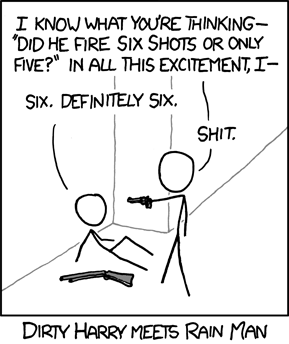
Not so much into the bible study or the Founding Father study
I am not so much a fan of the first couple of weeks of law school. It's a little hard to get back into my routines and all, but mostly, I blame the Founding Fathers. Like 2/3 of my law school classes begin with the history of the subject I'm learning about, often with what the Founding Fathers thought about what the law should be. I realize there are often important clues to how we got where we are legally there, but I find the topic dull and am always itching to get to the part where we study cases about real people who had real disputes with one another.
I like the concepts. I'm just more interested in what happens when the concepts are applied in actual religious discrimination cases. This is as opposed to the similarities and differences between what George Mason and James Madison and Thomas Jefferson thought about the ideal wording for a religious discrimination statute.
In a week or so, we will be on to studying cases (that will reference the Founding Fathers' opinions at times--this stuff is important) and I won't have to exclusively study the Founding Fathers for another semester.
I like the theoretical aspects of law very much, as long as they are solving actual problems. When it is entirely theory vs. theory, though, I get kinda bored.
On the way home the other night, I started thinking about UUism and how some people want principles to cling to and interpret. Yet a lot of us are focused on our religion in the here and now. Living an unambiguous life in an ambiguous world is the focus here rather than the philisophical musings of an ancient text.
For me, it's a good fit.
CC
Ps. Criminal justice *headdesk* of the day.
Subscribe to:
Posts (Atom)