For what it's worth, the first draft is done.
CC
Thursday, February 09, 2006


Thoughts one has looking through a book of Renoir paintings in the waiting room of a hospice as a close friend gets her morphine drip changed
A guy I was dating once took one look at Renoir's painting Bather on a Rock and declared,
"I never knew you posed for Renoir"
(I was flattered, of course. Bather on a Rock is far more attractive than I am.)
But looking at Renoir today, I am less enthused. I thought Renoir would be a good choice for this moment. He's not a psychological painter. His paintings rarely seem to have much depth in that sense. He did beautiful things with composition and dappled light effects and all, but what's going on in the heads of his subjects is really almost never the point.
In a sense he was sort of the Mary Englebriet of his age, once famously declaring "Why shouldn't art be pretty? There are enough unpleasant things in the world." He liked to paint flowers and attractive children. Flowers and attractive children should be exactly what I need.
But it's not working for me today. Not that I had high hopes, given the circumstances, but when looking a Renoir and simply wanting to be entertained, one is rarely disappointed.
Today, I am disappointed.
If I have to look at representational work (I prefer abstract expressionism), I prefer pictures of adults. I like to imagine that I am like that guy in Josephine Tey's The Daughter of Time who can intuit a person's nature from his or her portrait. But I look for some of Renoir's portraits and I am underwhelmed. I had never noticed that the expressions that I once thought of as placid are really sort of bovine. I had thought Renoir celebrated the truly female form, but as I look at pair after pair of empty eyes, I start to wonder if Renoir actually liked women at all in any sense excepting the physical.
The reclining women bother me the most.
I stare at yet another nude and I realize that those dappled light effects are really quite corpselike with their patches of pale flesh tones and greens.
I decide I'm finished thinking about this for now. I close the art book and put in back on the bookshelf.
I go back to waiting for the nurse to come back in.
CC
"I never knew you posed for Renoir"
(I was flattered, of course. Bather on a Rock is far more attractive than I am.)
But looking at Renoir today, I am less enthused. I thought Renoir would be a good choice for this moment. He's not a psychological painter. His paintings rarely seem to have much depth in that sense. He did beautiful things with composition and dappled light effects and all, but what's going on in the heads of his subjects is really almost never the point.
In a sense he was sort of the Mary Englebriet of his age, once famously declaring "Why shouldn't art be pretty? There are enough unpleasant things in the world." He liked to paint flowers and attractive children. Flowers and attractive children should be exactly what I need.
But it's not working for me today. Not that I had high hopes, given the circumstances, but when looking a Renoir and simply wanting to be entertained, one is rarely disappointed.
Today, I am disappointed.
If I have to look at representational work (I prefer abstract expressionism), I prefer pictures of adults. I like to imagine that I am like that guy in Josephine Tey's The Daughter of Time who can intuit a person's nature from his or her portrait. But I look for some of Renoir's portraits and I am underwhelmed. I had never noticed that the expressions that I once thought of as placid are really sort of bovine. I had thought Renoir celebrated the truly female form, but as I look at pair after pair of empty eyes, I start to wonder if Renoir actually liked women at all in any sense excepting the physical.
The reclining women bother me the most.
I stare at yet another nude and I realize that those dappled light effects are really quite corpselike with their patches of pale flesh tones and greens.
I decide I'm finished thinking about this for now. I close the art book and put in back on the bookshelf.
I go back to waiting for the nurse to come back in.
CC
Wednesday, February 08, 2006
Linguist Friend: More on Mary's Consent
Linguist Friend put this in the comments section of his last post and I thought it was helpful clarification.
CC had expressed curiosity about this text on several occasions, so I took a look at what sense I could make of the Greek text in the form it has. This requires a certain amount of analysis from philological disciplines which will be dull to many people, but is necessary to know what form of the text should be used, and what it means. Since my early training was as a linguist/philologist, this is familiar territory for me. I am fallible, but I have had enough grounding here to have been invited to and carry through collaboration with the Society of Biblical Literature to publication on one occasion, although I no longer work in that area. I was rather surprised to realize that the modern revisors who created the NRSV had not escaped the influence of Jerome in their treatment of the text in question.
Beyond this is the issue of how people of the first century AD wrote and talked, and for what purposes. The people who wrote the NT were deeply imbued with the preceding oral or written texts of their peoples, as were the people who composed the Homeric poems and the Rig Veda. Thus Luke, like them, did not write like the author of a modern newspaper or history book. I need not believe that Mary literally saw and talked with an angel to attribute importance to Luke's text.
Indeed, as you say, one should not hang one's soul on the turn of a Biblical phrase. That way lies madness. I do not look at the text as if my religious beliefs depended on it, since I have never been a member of a Christian church. But it means much that I know the text when I must interact with people whose religious beliefs do depend on it, or who are in spiritual agony because they can no longer trust in those beliefs. Lack of knowledge of historical Christianity, on the other hand, is a problem both for UUs and Christians (some of whom overlap, of course).
The NT contains two versions that contain at least partial accounts of Jesus's birth and childhood, in Matthew and in Luke. They do not agree very well, and there is no reason to think of Luke's account of the Annunciation as a historical account. But, in view of the importance of Christian tradition in the world, the text is a historical phenomenon that is worth studying, like the texts of many other religions.
To reach defensible conclusions, however, first one must study it as a text, as I do here, and only then can one interpret it in terms of what the person referred to as Luke wanted to accomplish. Almost regretfully, I think that the person who has read my paragraphs on Luke 1:38 will be better prepared to evaluate the text in this sense than the person who works from the current translation and interpretation of the text of the text cited at the beginning of my note.
Linguist Friend
CC had expressed curiosity about this text on several occasions, so I took a look at what sense I could make of the Greek text in the form it has. This requires a certain amount of analysis from philological disciplines which will be dull to many people, but is necessary to know what form of the text should be used, and what it means. Since my early training was as a linguist/philologist, this is familiar territory for me. I am fallible, but I have had enough grounding here to have been invited to and carry through collaboration with the Society of Biblical Literature to publication on one occasion, although I no longer work in that area. I was rather surprised to realize that the modern revisors who created the NRSV had not escaped the influence of Jerome in their treatment of the text in question.
Beyond this is the issue of how people of the first century AD wrote and talked, and for what purposes. The people who wrote the NT were deeply imbued with the preceding oral or written texts of their peoples, as were the people who composed the Homeric poems and the Rig Veda. Thus Luke, like them, did not write like the author of a modern newspaper or history book. I need not believe that Mary literally saw and talked with an angel to attribute importance to Luke's text.
Indeed, as you say, one should not hang one's soul on the turn of a Biblical phrase. That way lies madness. I do not look at the text as if my religious beliefs depended on it, since I have never been a member of a Christian church. But it means much that I know the text when I must interact with people whose religious beliefs do depend on it, or who are in spiritual agony because they can no longer trust in those beliefs. Lack of knowledge of historical Christianity, on the other hand, is a problem both for UUs and Christians (some of whom overlap, of course).
The NT contains two versions that contain at least partial accounts of Jesus's birth and childhood, in Matthew and in Luke. They do not agree very well, and there is no reason to think of Luke's account of the Annunciation as a historical account. But, in view of the importance of Christian tradition in the world, the text is a historical phenomenon that is worth studying, like the texts of many other religions.
To reach defensible conclusions, however, first one must study it as a text, as I do here, and only then can one interpret it in terms of what the person referred to as Luke wanted to accomplish. Almost regretfully, I think that the person who has read my paragraphs on Luke 1:38 will be better prepared to evaluate the text in this sense than the person who works from the current translation and interpretation of the text of the text cited at the beginning of my note.
Linguist Friend
Funny Post
CC had the following phone conversation about five minutes ago:
CC: Hey, Joe, Pam says she has the jacket you left when you were visiting the hospice.
Joe-the-Math-Guy: Oh really? That's good to know.
CC: Yeah, she will bring it to you tomorrow. She picked it up because she thought it was mine. I called because I figured you might be worried about it. It is such a great jacket.
Joe: I wasn't worried, really, maybe mildly concerned.
CC: Either way, whatever level of concerned you were, I wanted to allay that.
Joe: Well, thank you for a layin' me.
(Mother of all awkward silences.)
CC: Should I cook you breakfast now?
Joe: Say "hi" to your husband for me.
And we rang off.
CC: Hey, Joe, Pam says she has the jacket you left when you were visiting the hospice.
Joe-the-Math-Guy: Oh really? That's good to know.
CC: Yeah, she will bring it to you tomorrow. She picked it up because she thought it was mine. I called because I figured you might be worried about it. It is such a great jacket.
Joe: I wasn't worried, really, maybe mildly concerned.
CC: Either way, whatever level of concerned you were, I wanted to allay that.
Joe: Well, thank you for a layin' me.
(Mother of all awkward silences.)
CC: Should I cook you breakfast now?
Joe: Say "hi" to your husband for me.
And we rang off.
Tuesday, February 07, 2006
Sunday, February 05, 2006
Did Mary consent? Linguist Friend looks into Luke 1:38
SUMMARY:
The text of Luke 1:38 is widely interpreted essentially as in the NRSV. No textual variations or grammatical issues of the Greek text are significant. The Greek word doule "female slave" in this text is commonly translated by the English term "servant", implying a legal status that scarcely existed in the Hellenistic world. This follows a West European tradition that apparently stems from the early Latin translations of the gospels. This translation is not appropriate in view of the knowledge of Hellenistic Greek and its legal terminology that has accumulated since major studies of the language and contents of the the Greek papyri from Ptolemaic Egypt began to appear about a century ago. Revision of the translation of this passage leads to a different understanding of Mary's response to the annunciation. Mary recognizes her subordinate position and what follows from it, no less, no more.
POST:
The NRSV text here reads, reporting the supposed words of Mary speaking in response to the words of the angel Gabriel that she will bear a child who will be called the Son of God:
"Here am I, the servant of the Lord; let it be with me according to your word".
The recent New Interpreters' Study Bible (Nashville 2003) notes "although introduced without reference to her family origins (v.27), Mary now claims a place in God's household. Partnership with God transcends family ties ( . . . )." This translation and note set the stage for the issue of the interpretation of this passage.
This is a passage where there are no significant variants of the Greek which might underly different understandings. The text is not attested in the papyri of the first three centuries AD, and the standard editions of the Greek text of Nestle/Aland (27th edition, 1999) and the United Bible Society (4th edition, Stuttgart, 1994) list only one minor variant. Other very minor variants of the text which need not be considered here are provided by Tischendorf (editio octava critica major, I, Leipzig 1869).
The Greek word doulos which is translated "servant" in the NRSV and in most English-language versions is more accurately to be translated "slave". Apparently on the basis of the etymological formation of the Greek word doulos, which contains the root "tie", the term "bondservant" or "bondswoman" has been used to translate it. Frederick Danker's new edition (Chicago, 2000) of Walter Bauer's wonderful standard dictionary of NT Greek defines the term clearly as "slave as an entity in a socioeconomic context" or "one who is solely committed to another, slave, subject". The word doulos is used in its concrete legal sense in references to legal slaves and is also used metaphorically in the second sense by speakers to those of rank much higher than theirs, such as officials, nobles, or God. This interpretation is based on the Bauer/Danker article on the word in the masculine gender (with literature); the much briefer article on the word in the feminine gender, where there are many fewer passages to consider, defines it as "female slave, bondswoman". Danker interprets the present passage as "an oriental expression, used by one of humble station in addressing one of higher rank or a deity". (p.259). Thus an interpretation such as that in the New Interpreter's Study Bible above, that Mary claims by its use a place as servant in God's household, is misleading.
The Bauer/Danker interpretation is not new. The distinguished German theologian Adolf Deissmann while at the University of Heidelberg wrote an epoch-making treatise Light from the Ancient East (1908, English 1910) in which he showed the importance of the late Greek of the Egyptian papyri for the interpretation of the Greek Bible and especially for the NT. Here Deissmann in a long excursus (pp.322 ff.) points out the significance for New Testament theology of the accurate understanding of the term doulos, which occurs in the feminine form in this passage. He discusses the use of the term especially in regard to Hellenistic popular law and references to manumission (in Greek, the same word as "redemption") in the NT, which lose their point if doulos is translated as "servant" rather than "slave". The point was also made by a British scholar who in terms of linguistic expertise in Hellenistic Greek usage was at least the equal of Deissmann, James Hope Moulton, in his Vocabulary of the New Testament(1914/1930). Moulton and his collaborator Milligan cite the study by the papyrologist Wilcken (1899) which points out the extent to which various occupations in the Hellenistic world were held exclusively either by slave labor or free labor. The issue of occupation thus overlaps the issue of legal status. It follows that, in the words of the International Critical Commentary volume on Luke by Alfred Plummer, "In an age in which almost all servants were slaves, the idea which is represented by our "servant" could scarcely arise" (Edinburgh 1901, p.26). The term used in the Greek NT defines Mary metaphorically in terms of her legal status (slave), not metaphorically in terms of her occupation. Since not all slaves in the Hellenistic world were house-servants, however, from Luke's Greek term "slave" it could not be inferred that the person to whom it referred was a servant.
However, the Latin translation which has overshadowed the Greek text in a tradition which we know from Jerome and is suggested even in the notes cited above translates the Greek term by a Latin one which often refers to occupation: "ecce ancilla Domini fiat mihi secundum verbum tuum" in the Biblia Sacra Latin text of the Wuerttembergische Bibelanstalt (ed. Robert Weber, Stuttgart 1969), which lists no textual variants. In Latin, the term "ancilla" is translated in the older (and broader) dictionary of Lewis and Short (OUP 1879) as "maidservant, handmaid, female slave" with the observation that it was commonly used as the feminine of servus. The newer Oxford Latin Dictionary ed. P.Glare (OUP 1996) treats the word more from a legal point of view ("female slave, slave girl, maidservant"), but Lewis and Short make clear the usage as a designation of occupation in later Latin than is treated in Glare's Oxford dictionary of classical Latin. Deissmann (p.323) points out that the German Bible translation of Luther also softens the Greek term "slave" and creates legal confusion, just as does the English translation by translating the Greek word "slave" by the English word "servant".
These traditions in West European Bible translations seem to reflect the influence of the early anonymous translators of the Greek NT into Latin whose work Jerome revised in his fourth-century Latin version of the gospels. The Latin text hovered in the back of the mind of early West European translators, even those working directly from the Greek, and its influence is not entirely absent even from modern scholarship. By contrast, this influence is lacking in the earliest East European translation, the Old Bulgarian translation of the NT of the mid-ninth century, which was carried out directly from the Greek, probably by Greeks who were bilingual in Old Bulgarian. There, the earliest surviving Old Bulgarian manuscripts of the gospels without an exception (I checked the six editions of them on my shelves) read the equivalent of "Behold the slave of the Lord" in this verse, which is also a correct rendering of the Greek original.
The second sentence in this verse, in the NRSV "let it be with me according to your word" simply is semantically parallel to the first. Since Mary takes the role of a slave, she can do nothing but submit. Plummer's older commentary on Luke (1901) agrees with the classic commentary on Luke of J.M.Creed (MacMillan, London 1930, p.21), which states that "Mary humbly accepts the lot which has been appointed for her". The modern commentary on Luke by I.H.Marshall in the New International Greek Testament Commentary (Grand Rapids, MI, 1978, p.72) states that "The scene closes with Mary's humble acceptance of the will of God". The Greek clause here is almost identical to the Septuagint's Greek OT text of Genesis 31:34, and perhaps is also related to Gen 21:1 as Marshall suggests. However, the Greek text in Luke would be better translated as "let it happen to me . . . " (sic also The New Jerusalem Bible 1985, p.1687), with an aorist verb referring to a particular event rather than to a state, in which the only suggestion of any active wish is the optative mood of the verb by which Mary expresses her submission. The absence of the definite article before the word "Lord" in the Greek text is consistent with Septuagint/ NT Greek usage in which common nouns such as "kyrios" and "theos" referring to unique divinities are frequently treated as proper names.
Thus, a more accurate translation of Mary's speech in Luke 1:38 would be "Behold the slave of the Lord. Let it happen to me according to your word." Mary expresses recognition of her absolutely subordinate position and what follows from it, no less, no more.
Finally, it is worth noting that an almost identical issue about the Greek terminology for "slave" arises in the translation of the Song of Simeon, also in Luke (2:29), where the AV has "Lord, now lettest thou thy servant depart", and Goodspeed recommends and justifies a rendering as "Now, Master, you will let your slave go free, . . . " (Edgar J. GoodspeedProblems of New Testament TranslationChicago 1945, pp.77-79).
The text of Luke 1:38 is widely interpreted essentially as in the NRSV. No textual variations or grammatical issues of the Greek text are significant. The Greek word doule "female slave" in this text is commonly translated by the English term "servant", implying a legal status that scarcely existed in the Hellenistic world. This follows a West European tradition that apparently stems from the early Latin translations of the gospels. This translation is not appropriate in view of the knowledge of Hellenistic Greek and its legal terminology that has accumulated since major studies of the language and contents of the the Greek papyri from Ptolemaic Egypt began to appear about a century ago. Revision of the translation of this passage leads to a different understanding of Mary's response to the annunciation. Mary recognizes her subordinate position and what follows from it, no less, no more.
POST:
The NRSV text here reads, reporting the supposed words of Mary speaking in response to the words of the angel Gabriel that she will bear a child who will be called the Son of God:
"Here am I, the servant of the Lord; let it be with me according to your word".
The recent New Interpreters' Study Bible (Nashville 2003) notes "although introduced without reference to her family origins (v.27), Mary now claims a place in God's household. Partnership with God transcends family ties ( . . . )." This translation and note set the stage for the issue of the interpretation of this passage.
This is a passage where there are no significant variants of the Greek which might underly different understandings. The text is not attested in the papyri of the first three centuries AD, and the standard editions of the Greek text of Nestle/Aland (27th edition, 1999) and the United Bible Society (4th edition, Stuttgart, 1994) list only one minor variant. Other very minor variants of the text which need not be considered here are provided by Tischendorf (editio octava critica major, I, Leipzig 1869).
The Greek word doulos which is translated "servant" in the NRSV and in most English-language versions is more accurately to be translated "slave". Apparently on the basis of the etymological formation of the Greek word doulos, which contains the root "tie", the term "bondservant" or "bondswoman" has been used to translate it. Frederick Danker's new edition (Chicago, 2000) of Walter Bauer's wonderful standard dictionary of NT Greek defines the term clearly as "slave as an entity in a socioeconomic context" or "one who is solely committed to another, slave, subject". The word doulos is used in its concrete legal sense in references to legal slaves and is also used metaphorically in the second sense by speakers to those of rank much higher than theirs, such as officials, nobles, or God. This interpretation is based on the Bauer/Danker article on the word in the masculine gender (with literature); the much briefer article on the word in the feminine gender, where there are many fewer passages to consider, defines it as "female slave, bondswoman". Danker interprets the present passage as "an oriental expression, used by one of humble station in addressing one of higher rank or a deity". (p.259). Thus an interpretation such as that in the New Interpreter's Study Bible above, that Mary claims by its use a place as servant in God's household, is misleading.
The Bauer/Danker interpretation is not new. The distinguished German theologian Adolf Deissmann while at the University of Heidelberg wrote an epoch-making treatise Light from the Ancient East (1908, English 1910) in which he showed the importance of the late Greek of the Egyptian papyri for the interpretation of the Greek Bible and especially for the NT. Here Deissmann in a long excursus (pp.322 ff.) points out the significance for New Testament theology of the accurate understanding of the term doulos, which occurs in the feminine form in this passage. He discusses the use of the term especially in regard to Hellenistic popular law and references to manumission (in Greek, the same word as "redemption") in the NT, which lose their point if doulos is translated as "servant" rather than "slave". The point was also made by a British scholar who in terms of linguistic expertise in Hellenistic Greek usage was at least the equal of Deissmann, James Hope Moulton, in his Vocabulary of the New Testament(1914/1930). Moulton and his collaborator Milligan cite the study by the papyrologist Wilcken (1899) which points out the extent to which various occupations in the Hellenistic world were held exclusively either by slave labor or free labor. The issue of occupation thus overlaps the issue of legal status. It follows that, in the words of the International Critical Commentary volume on Luke by Alfred Plummer, "In an age in which almost all servants were slaves, the idea which is represented by our "servant" could scarcely arise" (Edinburgh 1901, p.26). The term used in the Greek NT defines Mary metaphorically in terms of her legal status (slave), not metaphorically in terms of her occupation. Since not all slaves in the Hellenistic world were house-servants, however, from Luke's Greek term "slave" it could not be inferred that the person to whom it referred was a servant.
However, the Latin translation which has overshadowed the Greek text in a tradition which we know from Jerome and is suggested even in the notes cited above translates the Greek term by a Latin one which often refers to occupation: "ecce ancilla Domini fiat mihi secundum verbum tuum" in the Biblia Sacra Latin text of the Wuerttembergische Bibelanstalt (ed. Robert Weber, Stuttgart 1969), which lists no textual variants. In Latin, the term "ancilla" is translated in the older (and broader) dictionary of Lewis and Short (OUP 1879) as "maidservant, handmaid, female slave" with the observation that it was commonly used as the feminine of servus. The newer Oxford Latin Dictionary ed. P.Glare (OUP 1996) treats the word more from a legal point of view ("female slave, slave girl, maidservant"), but Lewis and Short make clear the usage as a designation of occupation in later Latin than is treated in Glare's Oxford dictionary of classical Latin. Deissmann (p.323) points out that the German Bible translation of Luther also softens the Greek term "slave" and creates legal confusion, just as does the English translation by translating the Greek word "slave" by the English word "servant".
These traditions in West European Bible translations seem to reflect the influence of the early anonymous translators of the Greek NT into Latin whose work Jerome revised in his fourth-century Latin version of the gospels. The Latin text hovered in the back of the mind of early West European translators, even those working directly from the Greek, and its influence is not entirely absent even from modern scholarship. By contrast, this influence is lacking in the earliest East European translation, the Old Bulgarian translation of the NT of the mid-ninth century, which was carried out directly from the Greek, probably by Greeks who were bilingual in Old Bulgarian. There, the earliest surviving Old Bulgarian manuscripts of the gospels without an exception (I checked the six editions of them on my shelves) read the equivalent of "Behold the slave of the Lord" in this verse, which is also a correct rendering of the Greek original.
The second sentence in this verse, in the NRSV "let it be with me according to your word" simply is semantically parallel to the first. Since Mary takes the role of a slave, she can do nothing but submit. Plummer's older commentary on Luke (1901) agrees with the classic commentary on Luke of J.M.Creed (MacMillan, London 1930, p.21), which states that "Mary humbly accepts the lot which has been appointed for her". The modern commentary on Luke by I.H.Marshall in the New International Greek Testament Commentary (Grand Rapids, MI, 1978, p.72) states that "The scene closes with Mary's humble acceptance of the will of God". The Greek clause here is almost identical to the Septuagint's Greek OT text of Genesis 31:34, and perhaps is also related to Gen 21:1 as Marshall suggests. However, the Greek text in Luke would be better translated as "let it happen to me . . . " (sic also The New Jerusalem Bible 1985, p.1687), with an aorist verb referring to a particular event rather than to a state, in which the only suggestion of any active wish is the optative mood of the verb by which Mary expresses her submission. The absence of the definite article before the word "Lord" in the Greek text is consistent with Septuagint/ NT Greek usage in which common nouns such as "kyrios" and "theos" referring to unique divinities are frequently treated as proper names.
Thus, a more accurate translation of Mary's speech in Luke 1:38 would be "Behold the slave of the Lord. Let it happen to me according to your word." Mary expresses recognition of her absolutely subordinate position and what follows from it, no less, no more.
Finally, it is worth noting that an almost identical issue about the Greek terminology for "slave" arises in the translation of the Song of Simeon, also in Luke (2:29), where the AV has "Lord, now lettest thou thy servant depart", and Goodspeed recommends and justifies a rendering as "Now, Master, you will let your slave go free, . . . " (Edgar J. GoodspeedProblems of New Testament TranslationChicago 1945, pp.77-79).
TheCSO explains "witnessing"
Actually, *proper* Christian witness (not the coercion that some Christians *think* is witnessing) has respect for reason and individual choice. Yes, it does start from the premise that a specific belief system is correct - but there is a fundamental respect for the rights of others to choose alternate paths.
If this is what we mean by "witness", then yes - I think that UU witness is a great idea. Obviously the specifics would be a bit different, but the overall ideas are surprisingly similar.
A good example of a code for proper Christian witness is the IVCF's Code of Ethics for Christian Witness:
As Christians called by the Living God, we seek first of all to honor Him and His ethical standards in all of our private and public lives, including our efforts to persuade others to believe the good news about Jesus Christ.
As Christian evangelists, we seek to follow the mandate, motives, message, and model of our God who is always pursuing and reclaiming those who are lost in sin and rebellion against Him.
We believe all people are created in God's image and therefore endowed with the capacity to be in relationship with their Creator and Redeemer. We disavow any effort to influence people that de-personalize or deprive them of their inherent value as persons.
Respecting the value of persons, we believe all people worthy of hearing the gospel of this loving Lord Jesus Christ. We equally affirm the inalienable right of every person to survey other opinions and convert to or choose a different belief system.
We believe in the gospel of Jesus Christ, and affirm the role and goal of the Christian evangelist. However, we do not believe that this justifies any means to fulfill that end. Hence, we disavow the use of any coercive techniques or manipulative appeals which bypass a person's critical faculties, play on psychological weaknesses, undermine relationship with family or religious institutions, or mask the true nature of Christian conversion.
While respecting the individual integrity, intellectual honesty, and academic freedom of all other believers and skeptics, we seek to proclaim Christ openly. We reveal our own identity and purpose, our theological positions and sources of information and will not be intentionally misleading. Respect for human integrity means no false advertising, no personal aggrandizement from successfully persuading others to follow Jesus, and no overly emotional appeals which minimize reason and evidence.
As Christian evangelists, we seek to embrace people of other religious persuasions in true dialogue. That is, we acknowledge our common humanity as equally sinful, equally needy, and equally dependent on the grace of God we proclaim. We seek to listen sensitively in order to understand, and thus divest our witness of any stereotypes or fixed formulae which are barriers to true dialogue.
As Christian evangelists, we accept the obligation to admonish one who represents the Christian faith in any manner incompatible with these ethical guidelines.
I stand corrected.
CC
If this is what we mean by "witness", then yes - I think that UU witness is a great idea. Obviously the specifics would be a bit different, but the overall ideas are surprisingly similar.
A good example of a code for proper Christian witness is the IVCF's Code of Ethics for Christian Witness:
As Christians called by the Living God, we seek first of all to honor Him and His ethical standards in all of our private and public lives, including our efforts to persuade others to believe the good news about Jesus Christ.
As Christian evangelists, we seek to follow the mandate, motives, message, and model of our God who is always pursuing and reclaiming those who are lost in sin and rebellion against Him.
We believe all people are created in God's image and therefore endowed with the capacity to be in relationship with their Creator and Redeemer. We disavow any effort to influence people that de-personalize or deprive them of their inherent value as persons.
Respecting the value of persons, we believe all people worthy of hearing the gospel of this loving Lord Jesus Christ. We equally affirm the inalienable right of every person to survey other opinions and convert to or choose a different belief system.
We believe in the gospel of Jesus Christ, and affirm the role and goal of the Christian evangelist. However, we do not believe that this justifies any means to fulfill that end. Hence, we disavow the use of any coercive techniques or manipulative appeals which bypass a person's critical faculties, play on psychological weaknesses, undermine relationship with family or religious institutions, or mask the true nature of Christian conversion.
While respecting the individual integrity, intellectual honesty, and academic freedom of all other believers and skeptics, we seek to proclaim Christ openly. We reveal our own identity and purpose, our theological positions and sources of information and will not be intentionally misleading. Respect for human integrity means no false advertising, no personal aggrandizement from successfully persuading others to follow Jesus, and no overly emotional appeals which minimize reason and evidence.
As Christian evangelists, we seek to embrace people of other religious persuasions in true dialogue. That is, we acknowledge our common humanity as equally sinful, equally needy, and equally dependent on the grace of God we proclaim. We seek to listen sensitively in order to understand, and thus divest our witness of any stereotypes or fixed formulae which are barriers to true dialogue.
As Christian evangelists, we accept the obligation to admonish one who represents the Christian faith in any manner incompatible with these ethical guidelines.
I stand corrected.
CC
CC and the CSO’s guide to watchable SNL skits
Saturday Night Live actually does not suck if you have TiVo. It takes like half an hour to watch, but the good parts are still really good. For the past few months, TheCSO and I have been working on a guide for those TiVoing SNL. We like to minimize the suckage by predicting early on if a skit will be funny or not.
Here are the guidelines we've figured out;
Keep watching:
-Weekend Update. (Duh!)
-Anything about a convention
-Tina Fey
-Hardball with Chris Matthews
-Rachel Dratch as Debbie Downer.
-Will Forte as Tim Conway
-Anything where Keenan Thompson makes fun of slam poetry
-High school kids putting on some sort of show
-President Bush
Good signs:
-Maya Rudolph, unless she’s playing Donatella Versace
-Pirates
-Celebrities playing themselves
-Goths
-Will Forte
-Parodies of news shows
Bad signs:
-Set in a restaurant (very few good skits are set in restaurants. Last really good one CC can remember was last Mother’s Day although the one with the Amtrak lady a few weeks ago was passable.)
-Set in an office
-Set in the future
-Set at a party
-Set at a hospital
-Horatio Sanz
-Parody celebrity interview shows
Just go ahead and hit fast forward:
-Set in Target
-Horatio Sanz in a dress
-Someone playing a kid
-Merv the Perv
-Set in Outer Space
Here are the guidelines we've figured out;
Keep watching:
-Weekend Update. (Duh!)
-Anything about a convention
-Tina Fey
-Hardball with Chris Matthews
-Rachel Dratch as Debbie Downer.
-Will Forte as Tim Conway
-Anything where Keenan Thompson makes fun of slam poetry
-High school kids putting on some sort of show
-President Bush
Good signs:
-Maya Rudolph, unless she’s playing Donatella Versace
-Pirates
-Celebrities playing themselves
-Goths
-Will Forte
-Parodies of news shows
Bad signs:
-Set in a restaurant (very few good skits are set in restaurants. Last really good one CC can remember was last Mother’s Day although the one with the Amtrak lady a few weeks ago was passable.)
-Set in an office
-Set in the future
-Set at a party
-Set at a hospital
-Horatio Sanz
-Parody celebrity interview shows
Just go ahead and hit fast forward:
-Set in Target
-Horatio Sanz in a dress
-Someone playing a kid
-Merv the Perv
-Set in Outer Space
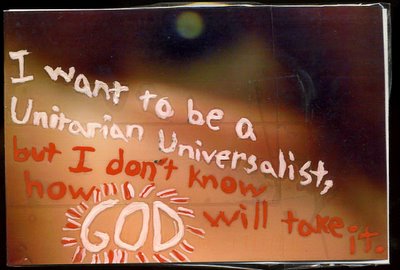
Stoopid Architects!
Judging by the the previews for the new Pink Panther movie, that movie is entirely about mocking French people.
Cool...
Cool...
Saturday, February 04, 2006
Mocking CC's heritage.
CC is a big whiner when it comes to cleaning the house. She will cook, and elaborately so if she has the time (last night's dinner was baked trout with garlic-basil sauce,) but she hates to clean.
She has done some work during the week on making the house less cluttery, so she is somewhat less than thrilled when the CSO wants to work on the house all weekend.
This afternoon, the CSO says,
"OK, I'll do some laundry, why don't you work on the kitchen?"
"Aww! But I don't wanna!" (OK, I didn't say it exactly like that. But I'm sure I whined.)
"Oh," the CSO said, putting a dramatic sob into his voice. "Well...if you
really...don't...want to," sniffle "I guess...I'll do it all...myself."
"Ha!" CC said, snuggling up to him. "Well, I'll have you know that I wasn't raised Catholic, so that guilt stuff won't work on me."
"You were raised Presbyterian"" he said, taking my hands in his "Well, we'd like to appoint you to the 'Clean the damn house' committee. I know it's a big honor and you're welcome. Now, it won't be a really big time commitment, not at all. Please don't say "no," I already have you signed up..."
Oh, maybe you had to be there.
CC
She has done some work during the week on making the house less cluttery, so she is somewhat less than thrilled when the CSO wants to work on the house all weekend.
This afternoon, the CSO says,
"OK, I'll do some laundry, why don't you work on the kitchen?"
"Aww! But I don't wanna!" (OK, I didn't say it exactly like that. But I'm sure I whined.)
"Oh," the CSO said, putting a dramatic sob into his voice. "Well...if you
really...don't...want to," sniffle "I guess...I'll do it all...myself."
"Ha!" CC said, snuggling up to him. "Well, I'll have you know that I wasn't raised Catholic, so that guilt stuff won't work on me."
"You were raised Presbyterian"" he said, taking my hands in his "Well, we'd like to appoint you to the 'Clean the damn house' committee. I know it's a big honor and you're welcome. Now, it won't be a really big time commitment, not at all. Please don't say "no," I already have you signed up..."
Oh, maybe you had to be there.
CC
Friday, February 03, 2006
Must we "witness"?
I assume the term "witnessing" has been used by religious liberals for awhile and I've just missed it.
I've seen it several times recently and it kind of bugs me.
This kind of gets to the heart of one of my issues with the language of reverence debate. (Yes, that again.)
Part of the argument for a language of reverence is that people know what religious terminology means and it resonates with them. This is true.
My response to this is that people do know, for example, what "getting saved," for example, means. But I have a really negative impression of it. I don't want to "get saved." If a close friend announced that he/she had "gotten saved," I have to say I would worry about them. The resonance I have with the term isn't positive.
This brings me to "witnessing."
There wasn't a whole lot of conservative Christianity in Northern Virginia when I was a kid, so nobody really witnessed to me until I went to college. There I got witnessed aplenty.
After awhile, I learned to say "I've seen on Law and Order that you can't be both a witness and a judge. So you can tell me about your beliefs, but you can't decide if they are right for me."
Anyway, I guess my point is, I get the concept of adopting a term, changing its connotation and making it our own.
But why is this a term we want to use?
CC
I've seen it several times recently and it kind of bugs me.
This kind of gets to the heart of one of my issues with the language of reverence debate. (Yes, that again.)
Part of the argument for a language of reverence is that people know what religious terminology means and it resonates with them. This is true.
My response to this is that people do know, for example, what "getting saved," for example, means. But I have a really negative impression of it. I don't want to "get saved." If a close friend announced that he/she had "gotten saved," I have to say I would worry about them. The resonance I have with the term isn't positive.
This brings me to "witnessing."
There wasn't a whole lot of conservative Christianity in Northern Virginia when I was a kid, so nobody really witnessed to me until I went to college. There I got witnessed aplenty.
After awhile, I learned to say "I've seen on Law and Order that you can't be both a witness and a judge. So you can tell me about your beliefs, but you can't decide if they are right for me."
Anyway, I guess my point is, I get the concept of adopting a term, changing its connotation and making it our own.
But why is this a term we want to use?
CC
Fresh UU bloggy goodness.
A few new UU blogs:
Turned up this site, the website of a British Unitarian Panentheist group.
I found my little UU heart sinking a few times when I read this, where a lady talks about some of her misgivings about her UU church.
A lady who has commented on that post writes:
And as genuine, died-in-the-wool LGBT person, I am sick of hearing how I should be UU. I don't want to go to some church that just wants my lesbian chic. I want to be part of church that is a church, doing what a church should do--welcome everyone. And while I do appreciate (especially since moving to the prairie where it can be harder to discern safe from unsafe spaces) the rainbow stickers on welcoming church doors, self-congratulation about how cool and hip UU's are on queer stuff icks me out.
Don't even get me started on a 99% white congregation doing Kwaanza. That's downright racist, if you ask me.
Ouch.
Also, this is CrallSpace, a nifty blog run by a UU. I'm linking to a post on UU evangelizing, a perennial topic of discussion aroung the UU blogosphere.
CC
Turned up this site, the website of a British Unitarian Panentheist group.
I found my little UU heart sinking a few times when I read this, where a lady talks about some of her misgivings about her UU church.
A lady who has commented on that post writes:
And as genuine, died-in-the-wool LGBT person, I am sick of hearing how I should be UU. I don't want to go to some church that just wants my lesbian chic. I want to be part of church that is a church, doing what a church should do--welcome everyone. And while I do appreciate (especially since moving to the prairie where it can be harder to discern safe from unsafe spaces) the rainbow stickers on welcoming church doors, self-congratulation about how cool and hip UU's are on queer stuff icks me out.
Don't even get me started on a 99% white congregation doing Kwaanza. That's downright racist, if you ask me.
Ouch.
Also, this is CrallSpace, a nifty blog run by a UU. I'm linking to a post on UU evangelizing, a perennial topic of discussion aroung the UU blogosphere.
CC
Thursday, February 02, 2006
Shoutout to my homies
Last night, I found a blog run by my college pals Rob and Nicole who are Chicago political Democrat types.
In totally unrelated news, if a bunch of dead people start voting for TheChaliceBlog in the UU Blog Awards, I had nothing to do with it, I totally swear.
CC
In totally unrelated news, if a bunch of dead people start voting for TheChaliceBlog in the UU Blog Awards, I had nothing to do with it, I totally swear.
CC
Wednesday, February 01, 2006
The national "Sliced Bread Contest" has a winner
Check it out. The Fixing UUism contest goes on. Email me your votes at chalicechick at gmail dot com.
CC
CC
A more positive online presence for UUism
I often find myself having the same argument on different sides. In college, there was an entire semester when I was the go-between between a professor friend and my father, who were having an argument-by-proxy on whether language creates thought or thought creates language. The professor eventually convinced me that language creates thought*. (e.g. Changing the "Department of War" into the "Department of Defense" did not change people's impressions of that government agency. It just made the word "defense" scarier.)
I think I'm doing it again.
I just finished a long argument in the comments section of one of Happy Feminist's posts about how appearing angry is a bad thing for feminism.
Yet as Left Coast Unitarian points out, there are a lot of people airing complaints about UUism. I'm absolutely one of them.
I can satisfy myself with my reasons for the contradiction as I understand them. (One example is that I doubt that many potential newcomers who saw our fairly dry criticisms of the UUA are scared off, but anger is a bad tool for recruitment so I'm not crazy about feminists who appear really angry getting on the news and making those conservatives who complain that feminism is all about bitterness appear to be right.)
But the larger question of: "Are we hurting our faith by bitching so much?" still exists. A few people, PG and Will, for example, have asked me about UUism after finding my blog other ways. (PG got an actual answer. Will, if you're reading this, you will get one.)
I guess partially the issue exists because it's hard to write about how happy you are. There's not much to say. I mean, I've written several posts about what I love about UUism.
But at the same time, if we all focussed our blogs on that, it would get dull. I read libertarian blogs and feminist blogs as well, neither of them focus so much on what they love about libertarianism and feminism. Mostly they write about critiques of things going on in their world looking at them from their own political perspective. When people within the movement bitch at each other, I generally regard it as fueled by each side's love of the movement as they percieve it. But James is probably right that newcomers don't necesarily see it that way.
(This whole conversation brings to mind my college friend Jesus Boy, who lived near the model dorm room used by the admissions office and would tell tour groups "don't come here, it's a crappy school.")
Any thoughts on this one? IMHO, it would be really cool if we had a place to send newcomers to show that our criticisms do come out of love.. If there were a giant group blog called "what I love about UUism" that we could all link to and submit our positive posts to, I would contribute to that. I would kind of hate to be part of the editing process, but I would contribute.
(Added later:
The following suggestion just showed up as a comment on The Happy Feminist:
You know, I'd love to see feminists have a Positive Day each week. A day they could write about the wonderful opportunities in their lives, how great it is to be a woman in this century, hell, even the good men they know, and how great it is to have them in their lives. I think it would be a grounding experience, good for the morale too. )
CC
Ps. While I'm being positive, random thought about the UU blog awards--it really does suck to be running against such deserving competition. (e.g. I seriously heart my How to run a Goddamn Meeting post and yet the series Jess did on Singing the Journey is a really valuable, wonderful thing, too. They are good in such different ways.)
*This is explained most accessibly in Stephen Pinker's book Language and the Mind, which is made much more readable if you do a shot every time you spot a straw man argument.
I think I'm doing it again.
I just finished a long argument in the comments section of one of Happy Feminist's posts about how appearing angry is a bad thing for feminism.
Yet as Left Coast Unitarian points out, there are a lot of people airing complaints about UUism. I'm absolutely one of them.
I can satisfy myself with my reasons for the contradiction as I understand them. (One example is that I doubt that many potential newcomers who saw our fairly dry criticisms of the UUA are scared off, but anger is a bad tool for recruitment so I'm not crazy about feminists who appear really angry getting on the news and making those conservatives who complain that feminism is all about bitterness appear to be right.)
But the larger question of: "Are we hurting our faith by bitching so much?" still exists. A few people, PG and Will, for example, have asked me about UUism after finding my blog other ways. (PG got an actual answer. Will, if you're reading this, you will get one.)
I guess partially the issue exists because it's hard to write about how happy you are. There's not much to say. I mean, I've written several posts about what I love about UUism.
But at the same time, if we all focussed our blogs on that, it would get dull. I read libertarian blogs and feminist blogs as well, neither of them focus so much on what they love about libertarianism and feminism. Mostly they write about critiques of things going on in their world looking at them from their own political perspective. When people within the movement bitch at each other, I generally regard it as fueled by each side's love of the movement as they percieve it. But James is probably right that newcomers don't necesarily see it that way.
(This whole conversation brings to mind my college friend Jesus Boy, who lived near the model dorm room used by the admissions office and would tell tour groups "don't come here, it's a crappy school.")
Any thoughts on this one? IMHO, it would be really cool if we had a place to send newcomers to show that our criticisms do come out of love.. If there were a giant group blog called "what I love about UUism" that we could all link to and submit our positive posts to, I would contribute to that. I would kind of hate to be part of the editing process, but I would contribute.
(Added later:
The following suggestion just showed up as a comment on The Happy Feminist:
You know, I'd love to see feminists have a Positive Day each week. A day they could write about the wonderful opportunities in their lives, how great it is to be a woman in this century, hell, even the good men they know, and how great it is to have them in their lives. I think it would be a grounding experience, good for the morale too. )
CC
Ps. While I'm being positive, random thought about the UU blog awards--it really does suck to be running against such deserving competition. (e.g. I seriously heart my How to run a Goddamn Meeting post and yet the series Jess did on Singing the Journey is a really valuable, wonderful thing, too. They are good in such different ways.)
*This is explained most accessibly in Stephen Pinker's book Language and the Mind, which is made much more readable if you do a shot every time you spot a straw man argument.
So humanity doesn't completely suck after all
TheCSO had called to cancel my phone, but we'd found out that if the phone were cancelled, the voicemail wouldn't work. I didn't want to lose my voicemail for the day, so we planned to just go get a new SIM card and put it theCSO's old phone until my replacement arrived.
Thus we didn't cut the phone off and could keep trying it. TheCSO did, and one time someone actually answered and talked to him. The guy who found my phone found it where he works and took it home, where his brother found it when the CSO called. TheCSO got the brother's address and we pciked up the phone last night.
So that's good.
CC
Thus we didn't cut the phone off and could keep trying it. TheCSO did, and one time someone actually answered and talked to him. The guy who found my phone found it where he works and took it home, where his brother found it when the CSO called. TheCSO got the brother's address and we pciked up the phone last night.
So that's good.
CC
Nifty links
Stuff I found when I couldn't sleep:
CC
- I really like this blog, which I found reading the comments onBitch PhD.
- As we all know, Nora Ephron sucks. But somebody is trying to improve her work. Check it out.
CC
Tuesday, January 31, 2006
The most beautiful words in the English language
are "that's what insurance is for" from your significant other when you've done something stupid.
(Didn't hit anybody with my car. Did either leave my cellphone in the ladies room of an office building and/or leave my bag where somebody could take my phone.)
On a related subject, there's something especially evil about taking someone's phone. Take my cash, I don't like it but I understand it. You can get as much use out of a twenty dollar bill as I can. But take my cellphone? I have international calls blocked. T-mobile is putting a hold on my phone number as we speak. Whoever took it got something like an hour or two of use out of it, and it will be really annoying to replace. I called my number and politely offered money if the cellphone was returned. I think I heard breathing on the other end, but no response. That phone is next to useless to anyone but me. Taking a cellphone is like taking somebody's prescription sunglasses or their prosthetic leg.
What's the point?
CC
who agrees that, yes, the prosthetic leg comparision was a tad over the line, but I really liked that phone.
(Didn't hit anybody with my car. Did either leave my cellphone in the ladies room of an office building and/or leave my bag where somebody could take my phone.)
On a related subject, there's something especially evil about taking someone's phone. Take my cash, I don't like it but I understand it. You can get as much use out of a twenty dollar bill as I can. But take my cellphone? I have international calls blocked. T-mobile is putting a hold on my phone number as we speak. Whoever took it got something like an hour or two of use out of it, and it will be really annoying to replace. I called my number and politely offered money if the cellphone was returned. I think I heard breathing on the other end, but no response. That phone is next to useless to anyone but me. Taking a cellphone is like taking somebody's prescription sunglasses or their prosthetic leg.
What's the point?
CC
who agrees that, yes, the prosthetic leg comparision was a tad over the line, but I really liked that phone.
Subscribe to:
Posts (Atom)